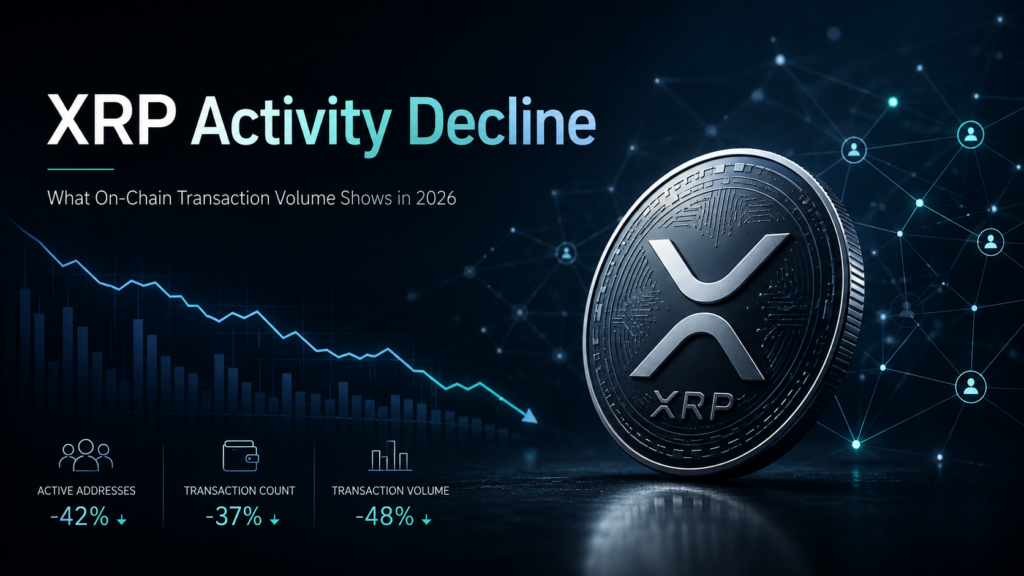
Quick answer: XRP on-chain transaction volume and active address counts have declined from 2024 peaks. The decline reflects a combination of: (1) lower crypto market activity broadly, (2) slower institutional adoption momentum after the Ripple/SEC settlement, and (3) competition from faster settlement networks. XRP’s price has held better than some altcoins, but network activity metrics lag behind the price narrative.
Last updated: June 3, 2026 · 8:00 a.m. ET
What “XRP Activity Decline” Means
| Metric | What It Measures | Where to Check |
|---|---|---|
| Daily transaction count | Number of XRP ledger transactions per day | XRP Scan, Bithomp, XRPL.org |
| Active addresses | Unique wallets active in a 24h period | Messari, Glassnode |
| Payment volume (XRP) | Value of XRP transferred on-chain | XRP Scan, CryptoQuant |
| DEX volume (XRPL) | Trading activity on the XRP Ledger DEX | XRPL.org/trade |
3 Reasons XRP Activity Has Slowed
1. Broad crypto market consolidation. After the 2024 bull cycle peak, transaction activity has declined across most major blockchains — not just XRP. Lower speculative volumes reduce active addresses and on-chain movement.
2. Post-settlement momentum stalled. The Ripple/SEC case settlement (2024) removed the major legal overhang but also removed the “resolution catalyst.” Institutional adoption picked up briefly, then normalized without a follow-through catalyst.
3. Competition from newer settlement rails. Stellar (XLM), Solana, and stablecoin-based payment networks have absorbed some of the institutional cross-border payment use case that XRP targets. SWIFT’s partnership announcements with competing networks have also created headwinds.
₿ Bitcoin & Ethereum — Market Moves & Flows →
🔗 Whale & Exchange Flows — On-Chain Signals →
📊 Altcoins — Token Moves & Narratives →
Activity vs. Price: The Disconnect
XRP price and XRP on-chain activity have diverged at points — price has remained relatively stable while network activity indicators have softened. This disconnect happens for a few reasons:
- XRP trades heavily on centralized exchanges, where most volume does not appear as on-chain transactions
- Whale-level transfers (large institutional moves) can sustain price without showing broad address-level activity growth
- Derivatives (futures and perpetuals on Binance, Bybit) create price exposure without touching the XRP Ledger
On-chain activity is one signal, not the complete picture. It measures actual network use, while price reflects broader sentiment and derivative positioning.
⚙️ Liquidations & Derivatives — Leverage Context →
📈 Crypto Explained — Why Coins Move →
🌐 Volatility & Sentiment — VIX & Risk Signals →
FAQ
Why is XRP activity declining?
Primarily: broader crypto market consolidation after 2024 peaks, post-Ripple/SEC settlement momentum normalization, and competition from alternative payment rail networks.
Where can I check XRP on-chain data?
XRPL.org (official ledger explorer), XRP Scan, Bithomp, and Messari provide transaction counts and active address data. Glassnode covers XRP on its paid tiers.
Does low XRP activity mean the price will fall?
Not necessarily. Price and on-chain activity can diverge, especially when most XRP trading volume occurs on centralized exchanges and derivatives markets rather than on the XRP Ledger directly.
Sources
- XRPL.org — XRP Ledger Explorer: xrpl.org
- XRP Scan — On-Chain Analytics: xrpscan.com
- Messari — XRP Network Data: messari.io
- CoinGecko — XRP Market Data: coingecko.com
Not financial advice. Written by Aybars Y. · EskiSignal Editorial · June 3, 2026