Last updated: June 14, 2026, 3:30 PM ET
Market context: YieldMax™ YMAX ETF distributions (educational explainer).
This article is for informational and educational purposes only. It is not financial advice, investment advice, or a recommendation to buy, sell, or hold any security, cryptocurrency, or financial product. Always verify data with official sources before making financial decisions.
Short answer: what is YMAX and how do its distributions work?
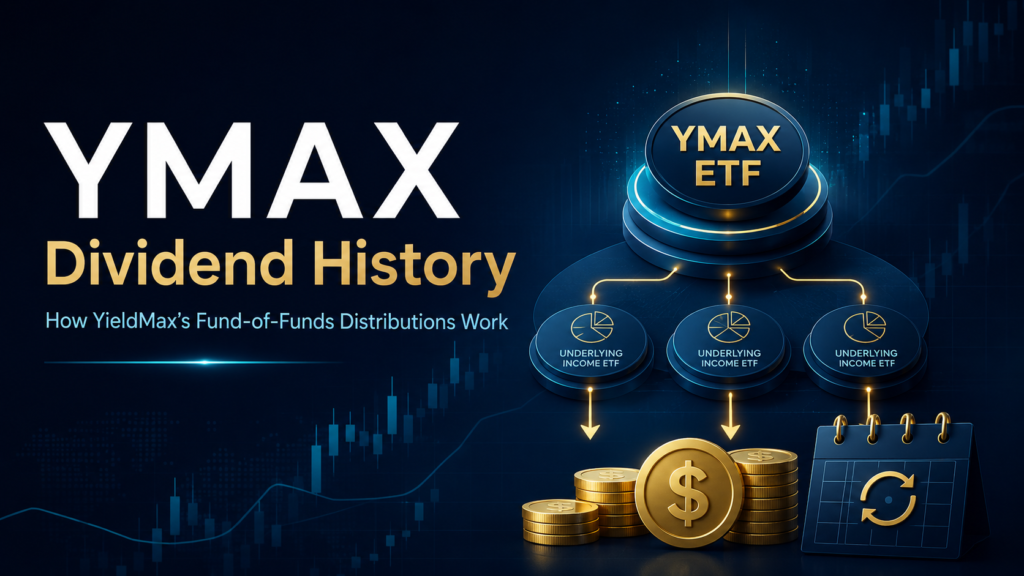
YMAX is the YieldMax™ Universe Fund of Option Income ETFs — a fund that holds a basket of other YieldMax single-ticker option-income ETFs rather than a single underlying stock. Like other YieldMax products, it has paid distributions on a frequent schedule (it has used a weekly distribution cadence at times). Distribution amounts vary period to period because they depend on option-income generation and fund decisions; they are not fixed or guaranteed.
This page explains how to find and read YMAX’s distribution history. It does not project future payouts or yield, and it is not advice to buy, sell, or hold the fund.
Sources to verify (always check these first)
- YieldMax / fund issuer site — official distribution announcements and schedule.
- Fund prospectus and fact sheet — structure, risks, and fees.
- Your brokerage — confirmed ex-dates, record dates, and pay dates.
- Nasdaq / exchange data — historical distribution records.
How YMAX is structured
| Feature | Detail |
|---|---|
| Type | ETF that holds a basket of YieldMax single-ticker option-income ETFs |
| Income source | Option-income strategies run by the underlying funds |
| Distribution cadence | Frequent; YieldMax has used weekly groups for some funds — confirm current schedule |
| Distribution amount | Variable each period; not fixed or guaranteed |
| Where to verify | Issuer announcements + your brokerage |
How to read a distribution history table
A distribution history typically lists, for each payment: the declaration date, the ex-dividend date, the record date, the pay date, and the distribution per share. Because YMAX distributions vary, looking at a single recent payment can be misleading — the pattern over many periods is more informative. The fields below are the columns to look for when you pull the official record.
| Column | What it means |
|---|---|
| Declaration date | When the distribution is announced |
| Ex-date | Own shares before this date to receive the distribution |
| Record date | The date of record for eligible holders |
| Pay date | When the cash is paid |
| Amount/share | The variable distribution for that period |
Why “yield” figures need context
Headline yield figures for option-income ETFs can look very high because they often annualize recent variable distributions. That math assumes the recent payout repeats, which is not guaranteed. Distribution rates and NAV can move, and a high distribution does not by itself indicate total return. Always separate the distribution rate from the fund’s actual performance, including any change in share price.
Key points table
| Point | Why it matters | Caveat |
|---|---|---|
| Distributions are variable | Past amounts do not set future ones | Can rise or fall each period |
| Yield is often annualized | Headline numbers can overstate stability | Assumes the latest payout repeats |
| NAV can decline | Total return ≠ distribution rate | Check price plus distributions |
| Fund-of-funds structure | Adds a layer vs single-ticker YieldMax ETFs | Read the prospectus |
Risks, uncertainty, and limits
- Option-income ETFs carry distinct risks; read the official prospectus.
- Distribution history is descriptive and does not predict future payments.
- This page does not provide a live amount — verify current figures with the issuer and your broker.
- Nothing here is a recommendation to buy, sell, or hold YMAX.
What to watch next
- The issuer’s next distribution announcement and ex-date.
- Any change to the distribution cadence (e.g., weekly vs other).
- NAV trend alongside distributions, for a total-return view.
- Prospectus updates on strategy, fees, or holdings.
What this article does not conclude
This explainer does not tell readers whether to own YMAX, and it does not forecast its distributions or yield. It explains the structure and how to verify the official record.
How often does YMAX pay distributions?
YieldMax has used a frequent (at times weekly) distribution cadence for funds in its lineup. The current schedule should be confirmed on the official issuer site and your brokerage, since cadence can change.
Are YMAX distributions guaranteed?
No. Distributions from option-income ETFs are variable and depend on income generation and fund decisions. Past amounts do not guarantee future payments.
Why is YMAX’s yield so high?
Headline yields for option-income ETFs are often annualized from recent variable distributions, which can overstate stability. A high distribution rate does not by itself reflect total return, and NAV can decline.
Where can I find YMAX’s official distribution history?
Check the YieldMax issuer site, the fund prospectus and fact sheet, exchange/Nasdaq data, and your brokerage for confirmed ex-dates, record dates, and pay dates.
Sources
- YieldMax / fund issuer distribution announcements and fund documents.
- Fund prospectus and fact sheet (structure, risks, fees).
- Exchange/Nasdaq distribution records; brokerage-confirmed dates.